
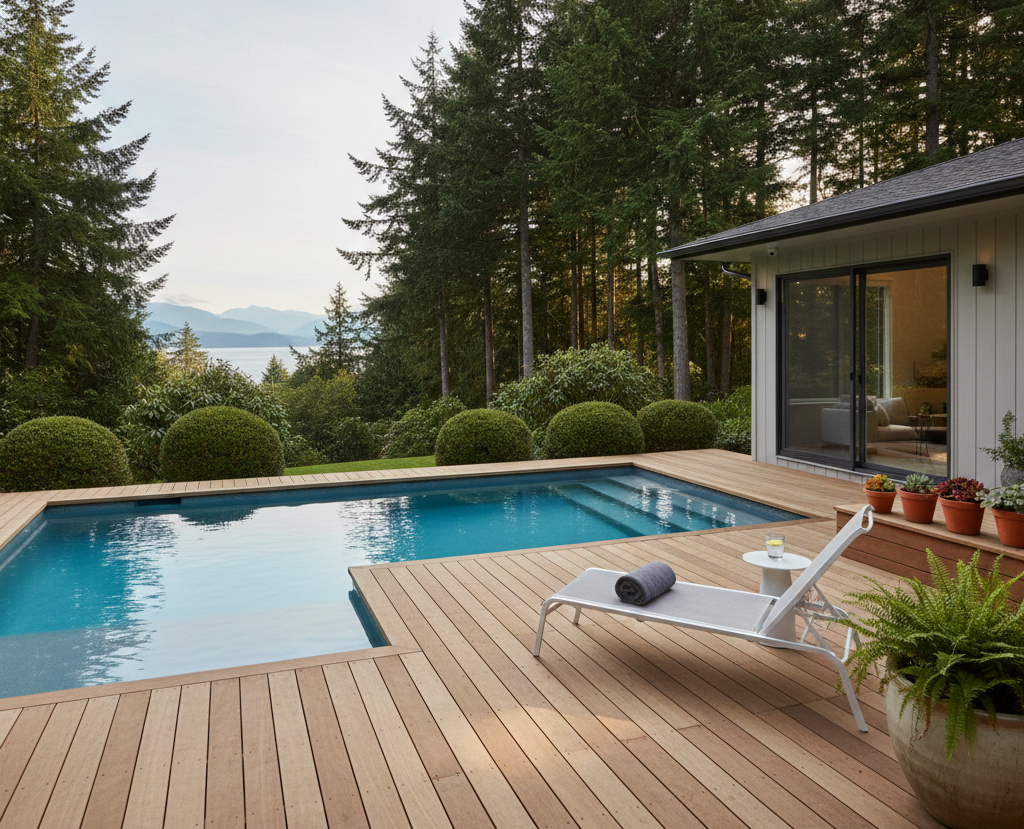
Fiberglass Pool Cost in Vancouver Island: 2026 Pricing Guide
If you’re researching Fiberglass Pool Cost, you’re likely asking one practical question: What will it actually cost me to install one on Vancouver Island?
Short answer: most homeowners can expect a total installed price between $45,000 and $95,000+, depending on site conditions, access, decking, and finishing features.
That’s the real-world range we see at Aqua Flow Pools, serving homeowners across Vancouver Island and the Sunshine Coast. Below, we break down what drives those numbers, where people overspend, and how to plan properly.
What’s Included in Fiberglass Pool Cost?
Fiberglass pool cost includes the pre-manufactured shell, excavation, installation, plumbing, electrical, backfill, and basic finishing. It does not automatically include landscaping, premium decking, or luxury add-ons.
In most cases, the shell itself represents only 30–40% of the total installed investment. The rest is site work and finishing.
Understanding that distinction prevents budget shock later.
Direct answer: Most installed fiberglass pools on Vancouver Island fall between $45,000 and $95,000+ in 2026.
Here’s how that typically breaks down:
Base Pool Package
- • Fiberglass shell
- • Delivery and crane placement
- • Standard filtration system
- • Basic plumbing and electrical
- • Initial backfill
Approximate range: $45,000–$65,000
Common Add-Ons
- • Concrete or paver decking: $8,000–$25,000+
- • Pool heater: $4,000–$7,000
- • Automatic safety cover: $12,000–$18,000
- • Saltwater system: $1,500–$3,000
- • Upgraded landscaping: highly variable
The primary factor influencing cost is site complexity. Sloped yards, crane access challenges, and rocky soil can significantly affect pricing on the Island.
1. Excavation Conditions
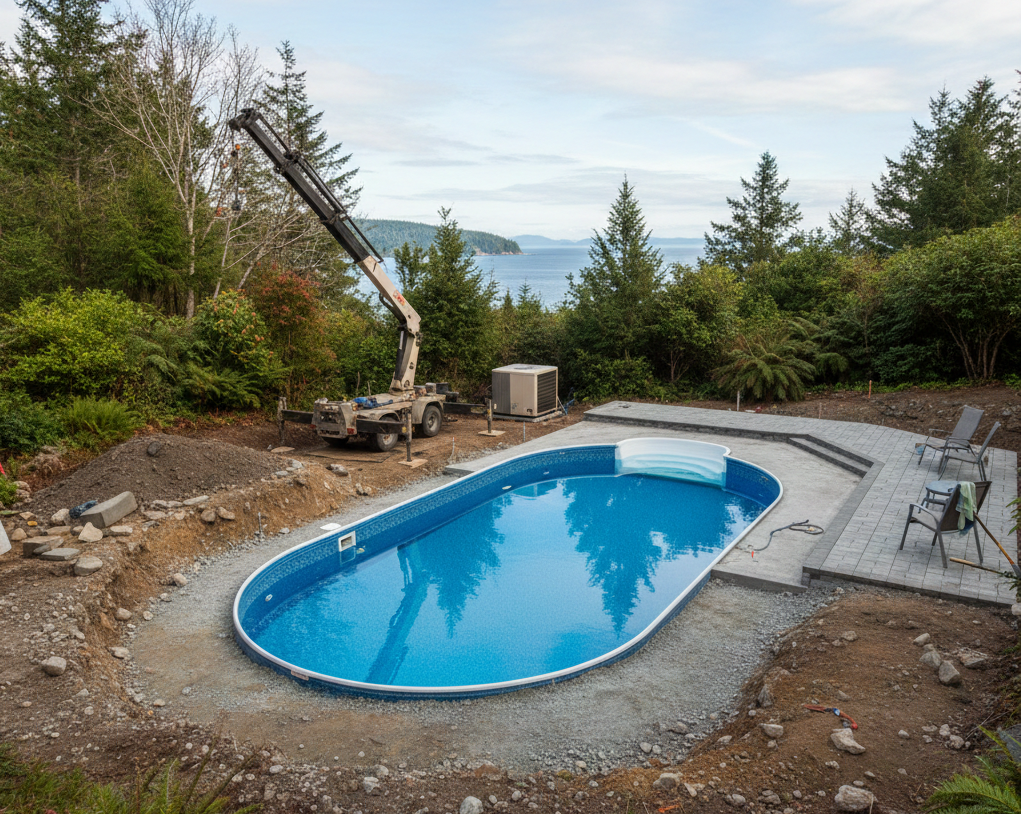
Vancouver Island soil varies widely. Some properties dig cleanly. Others hit rock quickly.
The biggest mistake is budgeting without accounting for potential rock excavation.
2. Crane Access
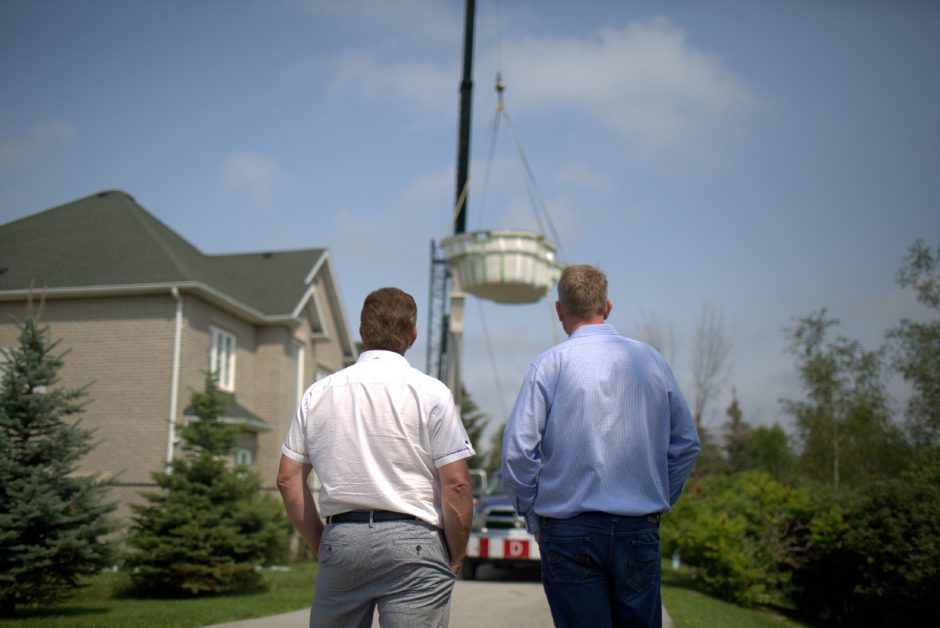
Fiberglass pools require crane placement. Tight access, overhead lines, or long reach distances increase equipment costs.
3. Decking & Finishing
Decking often surprises homeowners. Concrete and pavers are major cost drivers, especially for larger entertaining areas.
4. Heating Requirements
Island homeowners frequently heat their pools to extend swim season. That adds equipment and operational cost.
At Aqua Flow Pools, we see heating as one of the most requested upgrades in coastal BC.
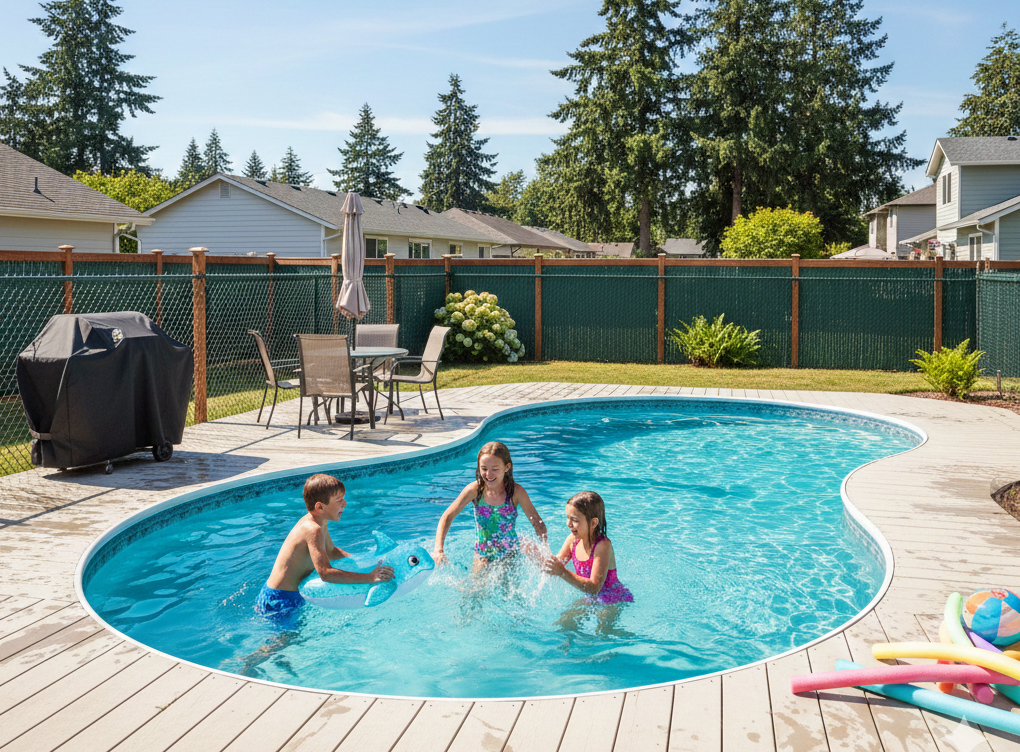
From a long-term financial standpoint, fiberglass offers key advantages:
- • Lower maintenance costs compared to vinyl liner pools
- • No liner replacement every 7–10 years
- • Smooth gelcoat surface reduces chemical usage
- • Faster installation reduces labour exposure
Over 10–15 years, fiberglass often costs less to maintain than vinyl alternatives.
Being honest here matters.
Unexpected Rock
Common in parts of Nanaimo, Parksville, and surrounding areas.
Drainage Requirements
High water tables and heavy rainfall require proper backfill and drainage systems.
Scope Creep
Outdoor kitchens, expanded patios, and lighting upgrades. It adds up quickly.
In most cases, cost overruns happen in landscaping, not the pool itself.
Fiberglass vs Vinyl Liner: Cost Comparison
When comparing fiberglass and vinyl liner pools, vinyl typically has a lower upfront cost, while fiberglass requires a higher initial investment.
On average, vinyl liner pools cost 15% to 25% less upfront than fiberglass pools of similar size. That lower entry price makes vinyl attractive at first glance.
However, vinyl liners typically require replacement every 7 to 10 years, and in BC, that can cost $6,000 to $10,000+ CAD per replacement. Over a 15 to 20-year ownership period, those costs can significantly reduce the initial savings.
For Vancouver Island climates, where freeze-thaw cycles, shifting soil, and heavy rainfall are common, structural integrity also becomes part of the long-term cost equation.
In many cases, vinyl is cheaper to install, but fiberglass is more predictable to own.
Step-by-Step: How to Budget for a Fiberglass Pool
1. Establish total comfort range (not just shell price).
2. Evaluate site access and soil.
3. Decide on the decking size early.
4. Factor in heating if you want more than 2 summer months.
5. Build a 10–15% contingency buffer.
Budgeting properly from day one reduces stress during construction.
FAQ: Fiberglass Pool Cost
How much does a small fiberglass pool cost?
Smaller plunge-style pools can start around $45,000 installed, depending on site conditions.
Does adding a heater significantly increase cost?
Yes. A heater adds $4,000–$7,000 upfront, plus seasonal operating costs.
Is a saltwater fiberglass pool more expensive?
Slightly upfront, usually $1,500–$3,000 more. Long-term maintenance is often easier.
Do fiberglass pools increase home value on Vancouver Island?
In many cases, yes. Outdoor living is highly valued in coastal BC markets.
What is the cheapest way to install a fiberglass pool?
Minimal decking, simple layouts, and straightforward access keep costs down.
How long does installation take?
Most fiberglass pools can be swim-ready in 2–4 weeks, depending on weather and finishing scope.
Are permits required on Vancouver Island?
Yes. Most municipalities require permits and fencing compliance.
Why Homeowners Choose Aqua Flow Pools
Aqua Flow Pools specializes in fiberglass pool installation across Vancouver Island and the Sunshine Coast.
In our experience, the most successful projects are the ones where expectations are aligned early. Clear budgets. Clear scope. No surprises.
We help homeowners understand:
• Realistic pricing
• Site-specific challenges
• Upgrade tradeoffs
• Long-term ownership costs
That clarity matters.
Ready to Get an Accurate Estimate?
If you’re seriously exploring fiberglass pool installation, the next logical step is a site-specific quote.
Pricing varies by property, and an online range can only go so far.