
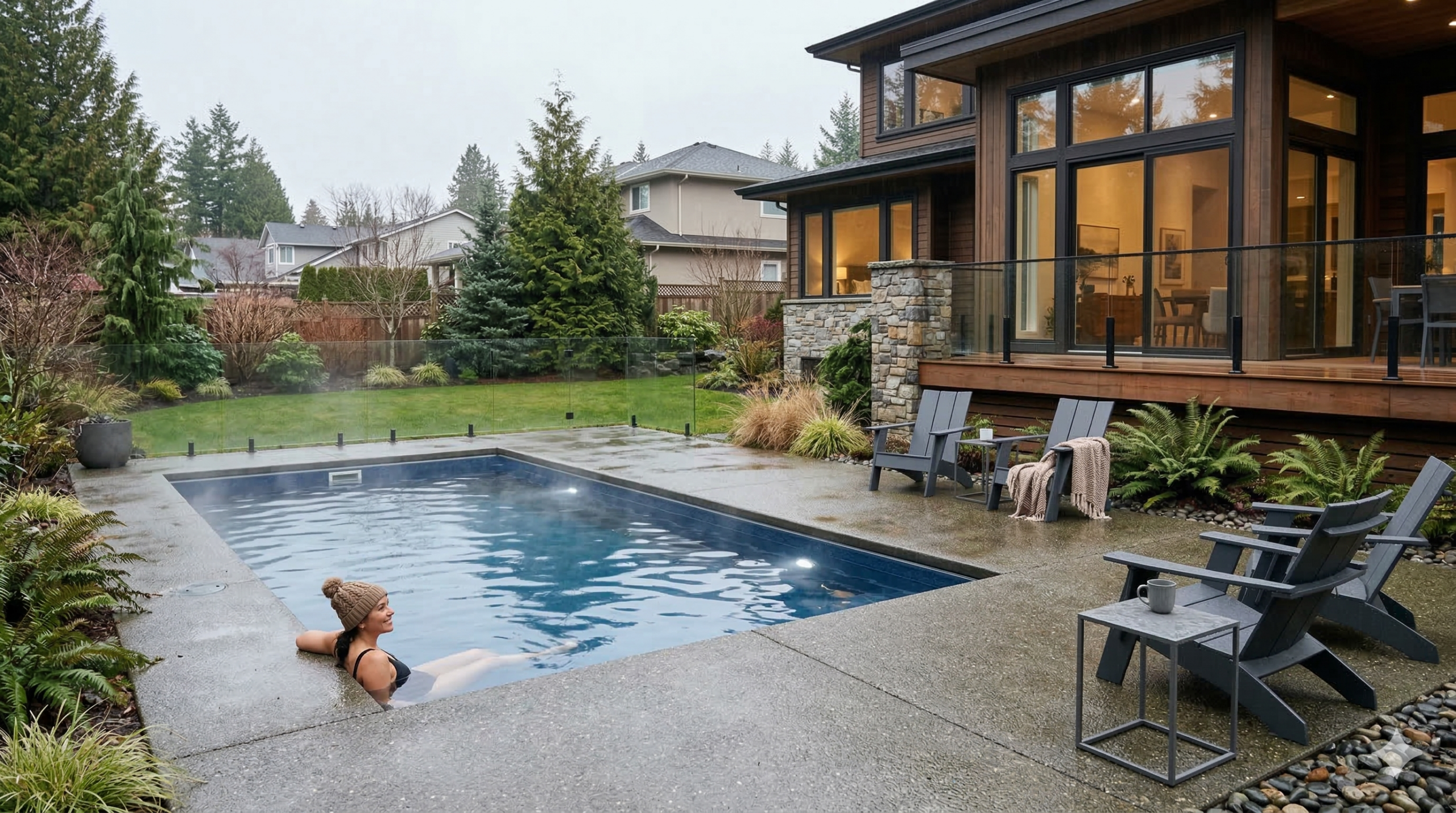
Heated Fiberglass Pools: Extending Your Swim Season on Vancouver Island
On Vancouver Island, summer is beautiful, but it’s short. Without heating, most backyard pools are comfortably usable for only a couple of months.
That’s why many homeowners exploring fiberglass pools eventually ask the practical question: Can you heat a fiberglass pool in BC, and is it worth it?
The direct answer is yes. Heated fiberglass pools are not only possible, they are also one of the most effective ways to extend your swim season on Vancouver Island.
At Aqua Flow Pools, heating is one of the most requested upgrades for homeowners who want more than a mid-summer dip.
What Is a Heated Fiberglass Pool?
A heated fiberglass pool is a standard fiberglass inground pool equipped with a heating system, typically a heat pump or gas heater, to maintain a consistent water temperature.
The fiberglass shell itself is fully compatible with modern heating systems. Its smooth, insulated structure actually supports efficient heat retention.
In simple terms, heating transforms a seasonal pool into a multi-month lifestyle feature. Or even an all-season pool if it fits your budget.
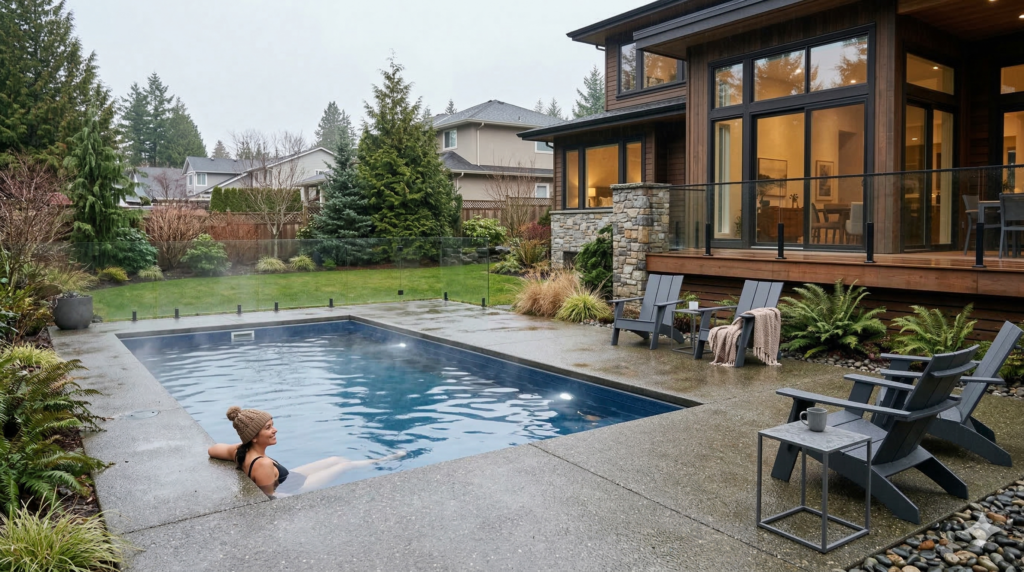
Vancouver Island has mild winters compared to much of Canada, but that doesn’t mean warm water.
Without heating:
- • Spring water temperatures remain cool well into June
- • Evenings drop quickly, even in July
- • September swimming becomes a little less comfortable
With heating:
- • Swim season can begin earlier in the spring
- • Evenings become usable
- • Early spring and Fall swimming becomes realistic
The primary benefit of pool heating in BC is time. More usable weeks each year.
Heated Fiberglass Pools in BC
What Are Your Options?
There are three main heating systems used in BC residential installations.
1. Electric Heat Pumps
Heat pumps extract warmth from ambient air and transfer it into the pool water.
Best suited for:
- • Moderate climate zones like Vancouver Island
- • Homeowners seeking energy efficiency
- • Longer swim seasons rather than rapid heating
- • Ideal for maintaining temperatures
They are efficient and steady, but slower to raise the temperature dramatically.
2. Natural Gas Heaters
Gas heaters warm water quickly.
Best suited for:
- • Homeowners who swim occasionally
- • Faster temperature increases
- • Larger pools needing quick adjustments
Operating costs are higher, but responsiveness is excellent
3. Hybrid Approaches
Some homeowners combine systems or integrate automation for optimal efficiency.
In most cases on Vancouver Island, heat pumps are the most popular choice due to climate compatibility and long-term operating cost balance.
At Aqua Flow Pools, system recommendations depend on usage patterns, not just equipment specs.
Direct answer:
Expect an upfront investment of approximately $4,000 to $7,000 CAD for a heat pump installation. Gas systems may vary depending on existing infrastructure.
Operating costs depend on:
- • Desired water temperature
- • Cover usage
- • Wind exposure
- • Electricity or gas rates
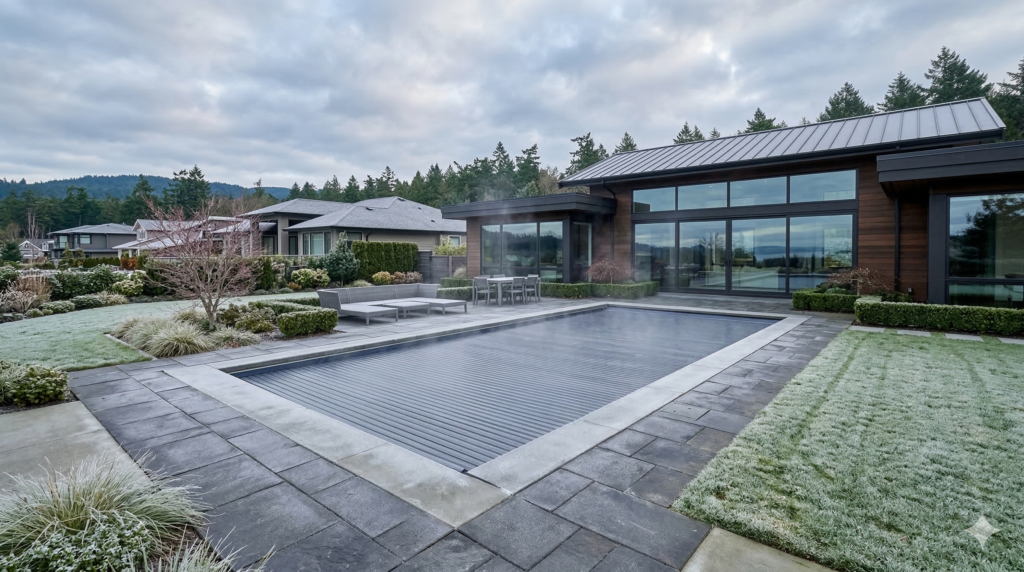
The biggest mistake is heating without using a pool cover.
A quality automatic or manual cover significantly reduces heat loss and operating expenses.
1. Extended Swim Season
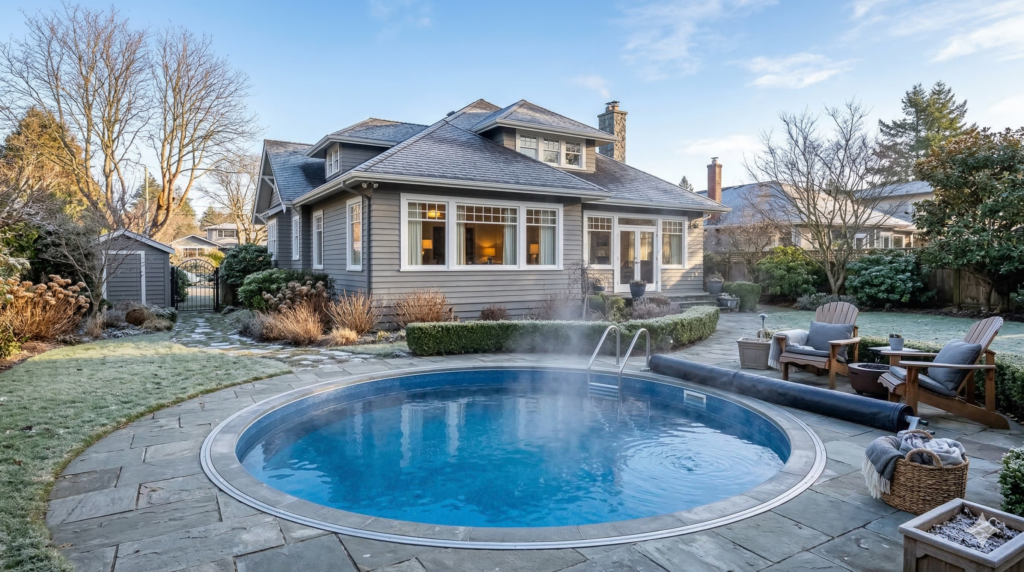
Heating can extend comfortable swimming by several months.
For many Island homeowners, that means April through October rather than July and August.
2. Increased Pool Usage
Pools that stay warm get used more.
That may sound obvious, but it changes how families interact with their backyard.
3. Better Return on Investment
If you’re investing in landscaping, decking, and design integration, maximizing usage improves perceived value.
In many cases, heating is what justifies the overall pool investment.
4. Comfort and Consistency
Fiberglass pools distribute heat evenly due to their smooth interior.
There are no cold spots caused by rough surfaces or inconsistent absorption.
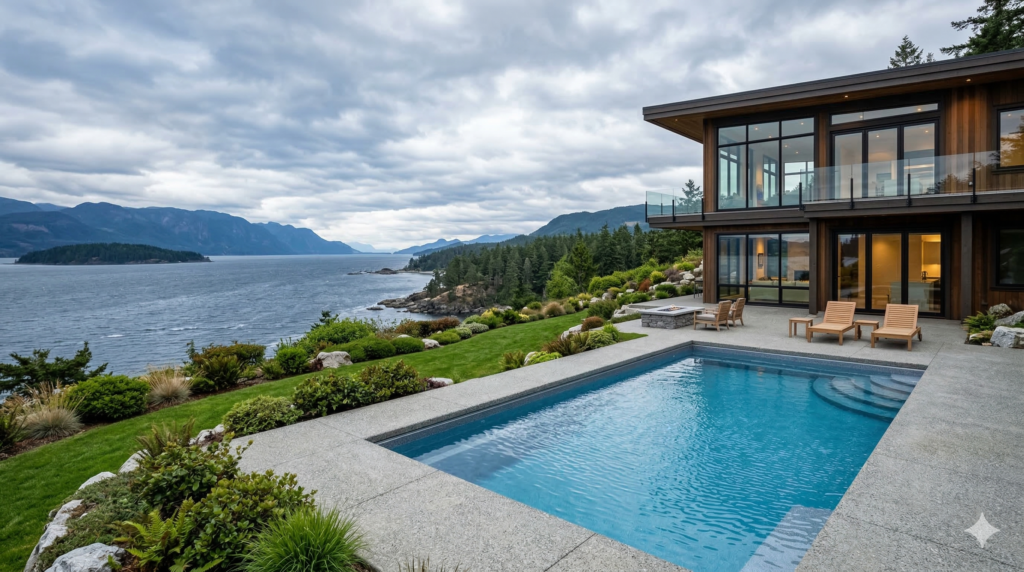
Heating is not free.
Energy Costs
Electricity or gas expenses will increase with usage.
Exposure and Wind
Unprotected pools lose heat quickly.
System Maintenance
Heat pumps and gas heaters require periodic servicing.
The primary factor influencing heating efficiency is environmental exposure, not the fiberglass shell.
Windbreaks, covers, and smart controls make a significant difference.
Heated Fiberglass vs Unheated: The Real Comparison
Unheated pools:
• Lower upfront cost
• Shorter usable season
• More weather-dependent
Heated pools:
• Higher upfront investment
• Longer swim season
• More predictable usage
The decision often comes down to how you plan to use your backyard.
If your goal is occasional peak-summer swimming, heating may be optional.
If your goal is consistent, lifestyle-driven enjoyment, heating becomes practical.
Installation Considerations in BC
On Vancouver Island and the Sunshine Coast, installing a heated fiberglass pool requires proper planning for electrical capacity and equipment compatibility. Heat pump systems draw continuous power, so efficiency becomes an important factor when extending the swim season. BC Hydro recommends using energy-efficient heating equipment to help manage long-term operating costs in residential applications. Permit requirements typically fall under general pool installation and electrical standards, and all heating systems must comply with BC safety codes.
At Aqua Flow Pools, heating integration is planned alongside the pool design, not added as an afterthought.
FAQ: Heated Fiberglass Pools in BC
Can fiberglass pools handle heated water?
Yes. Fiberglass shells are fully compatible with modern pool heating systems.
How warm can you keep a heated pool?
Most homeowners maintain temperatures between 78.8°F and 86°F, depending on preference, but fiberglass pools can handle temperatures all the way to 104 F.
Is it expensive to run a heated pool on Vancouver Island?
Costs vary by energy source and usage. Heat pumps are generally more efficient than gas for steady seasonal heating.
Do you need a pool cover with heating?
Strongly recommended. A cover significantly reduces heat loss and energy use.
Can you swim year-round in BC?
Full winter swimming isn’t as uncommon as you might think—and for many, it’s a popular choice for year-round enjoyment
Does heating affect pool lifespan?
No, when properly installed and maintained.
A Practical Perspective from Aqua Flow Pools
In our experience installing fiberglass pools across Vancouver Island, homeowners rarely regret adding heating. They more often regret not including it from the start.
The Island climate is mild enough to make heating effective, but cool enough that it makes a meaningful difference.
That balance makes heating a practical upgrade rather than a luxury add-on.
Considering a Heated Fiberglass Pool?
If extending your swim season sounds appealing, the next step is understanding what heating system suits your property and usage goals.
Contact Aqua Flow Pools to evaluate your site conditions, discuss energy options, and determine whether a heated fiberglass pool aligns with your long-term vision.
* Images are AI-generated or sourced from stock to visually explore the concepts and creative possibilities discussed in this article.